Where the Lioz comes from
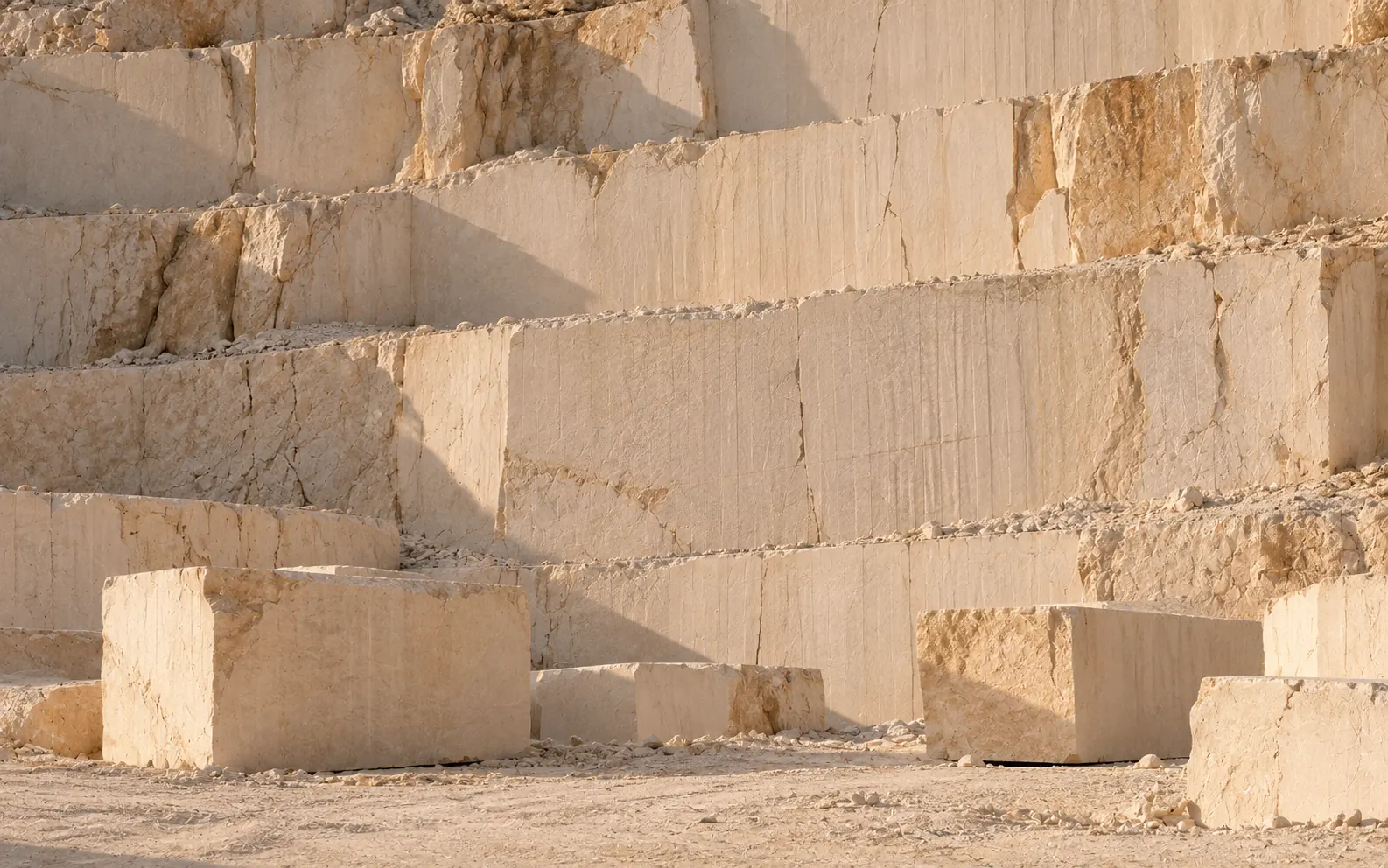
Lioz is the stone Lisbon is made of: the steps up to the Sé, the floors of the Jerónimos, the kerbs you have walked on without looking. It comes out of the ground at Pêro Pinheiro, behind Sintra, in pale blocks that are almost white when wet.
When the city was rebuilt after the earthquake of 1755, much of it was rebuilt in this stone, and you can still read the quarry in the steps: a faint pink vein here, the ghost of a shell there.
The quarries cut it for buildings, which means they cut it square, and whatever isn't square becomes offcut. Helena Côrte-Real works a few hundred metres away and takes the offcuts. Every Seixo starts as something a quarry didn't want.
Every Seixo starts as something a quarry didn't want.
She walks round an offcut for a day before she starts, looking for the form already in it — a curve a saw left behind, a corner that wants to be rounded. Then she carves by hand, with chisels and a mallet.
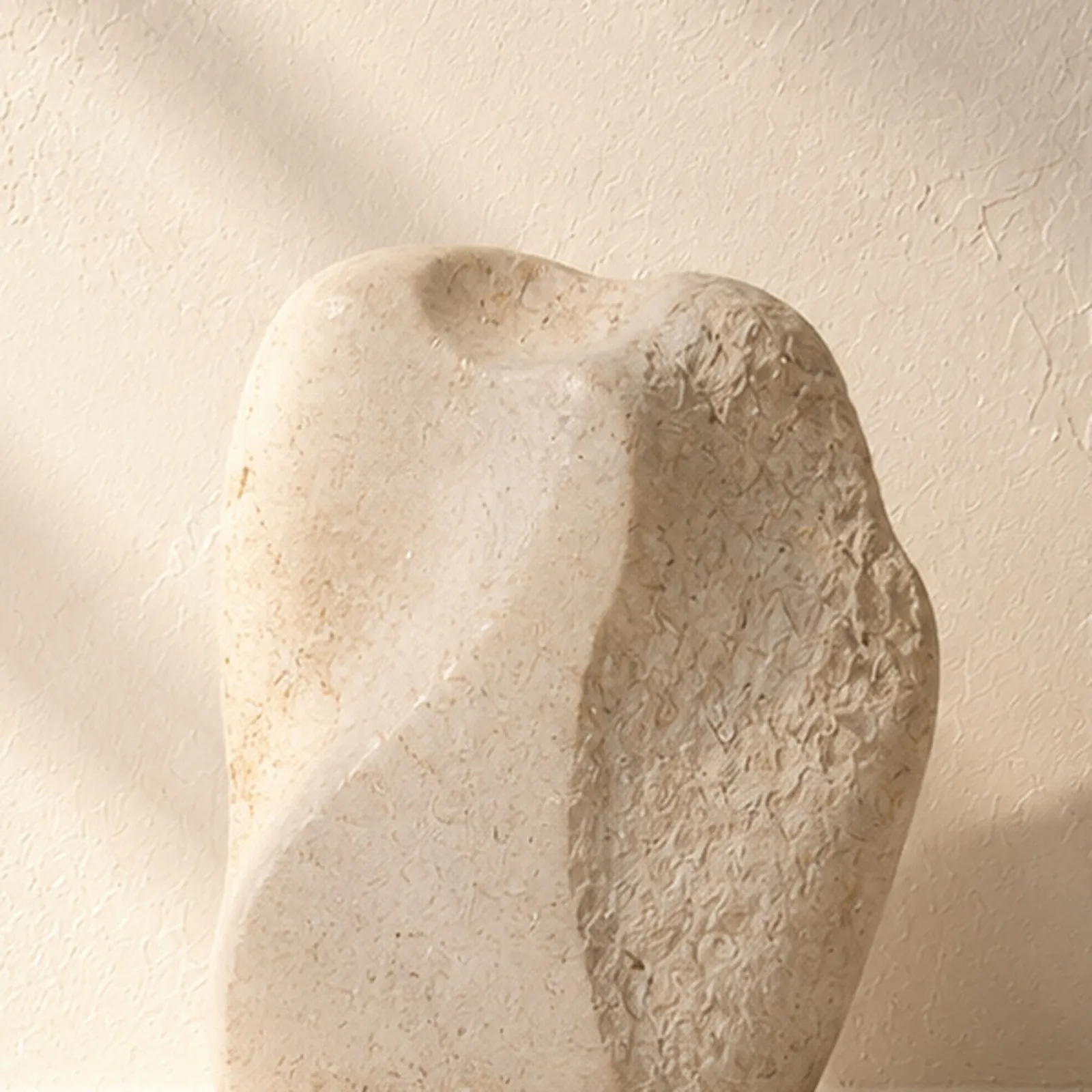
Lioz takes a long time to carve and almost no time to finish. It is so dense that a honed face looks polished in low light without being polished at all. Helena leaves one face honed and one a little rough, so the hand finds the difference before the eye does.
It is dense, cold and heavy, and it barely changes. That's why the city chose it, and why we did.