JOURNAL
Things we are asked, answered once, properly.
What the kiln decides
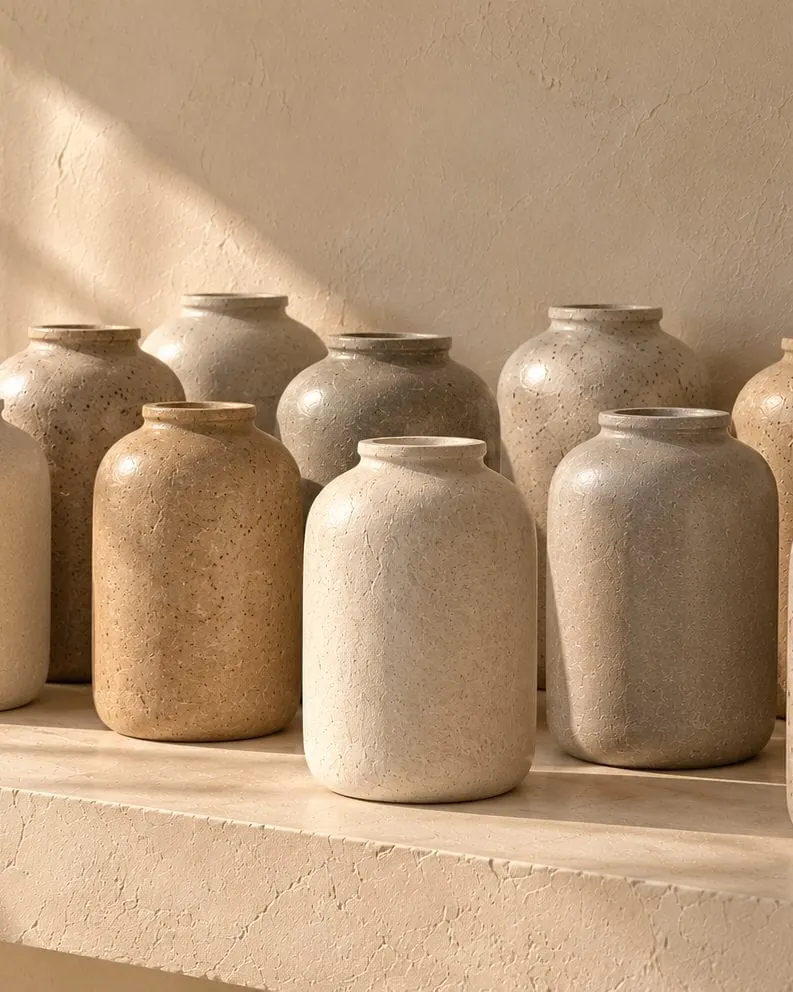
A dozen vessels go into the kiln the same colour. They come out as a family, not as copies. We're asked whether the one in the photograph is the one you'll get, and the honest answer is: nearly.
PIECES — 01 · 03
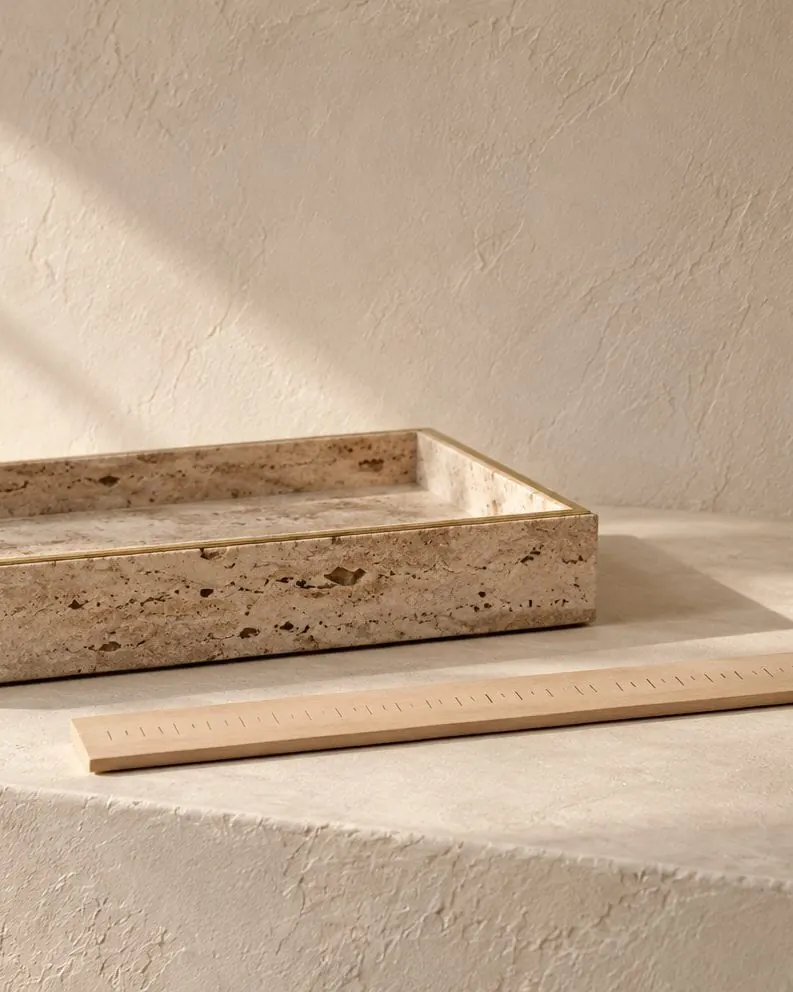
On the holes in travertine
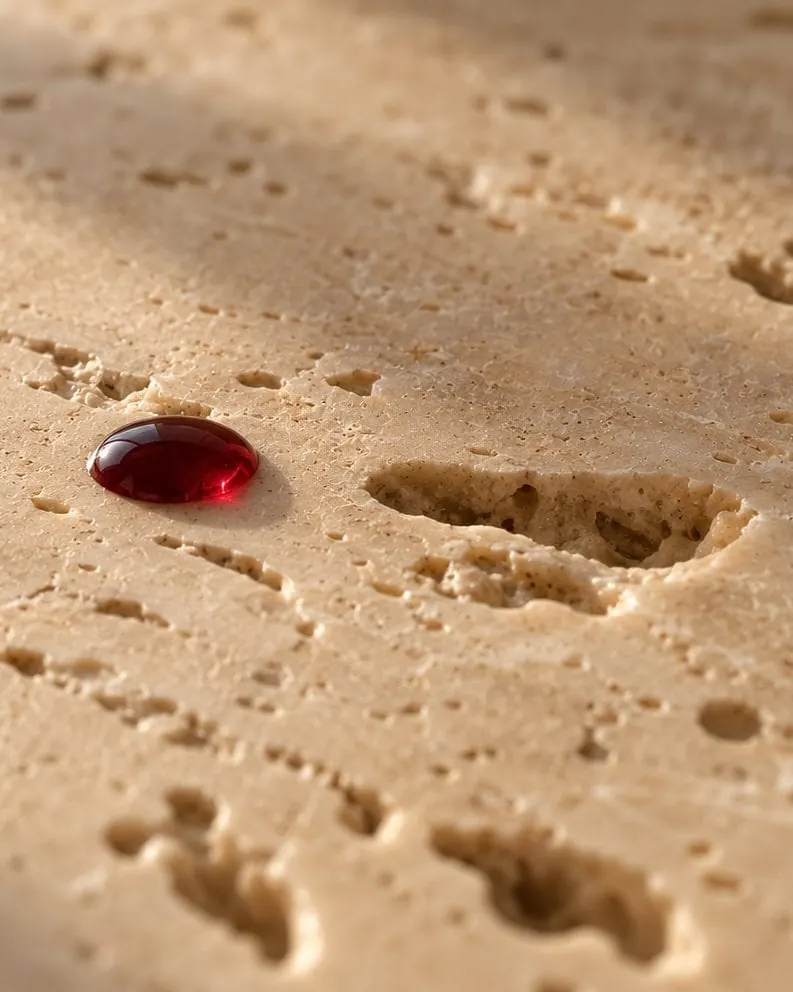
Travertine forms in hot springs; the holes are where the gas was. Fill them and you get a flat, slightly dead stone. Leave them and you get a surface that reads as made by something other than a machine. We leave them, and we seal the stone, so wine and oil wipe off.
PIECES — 04 · 05 · 06 · 14
Six weeks for a lamp
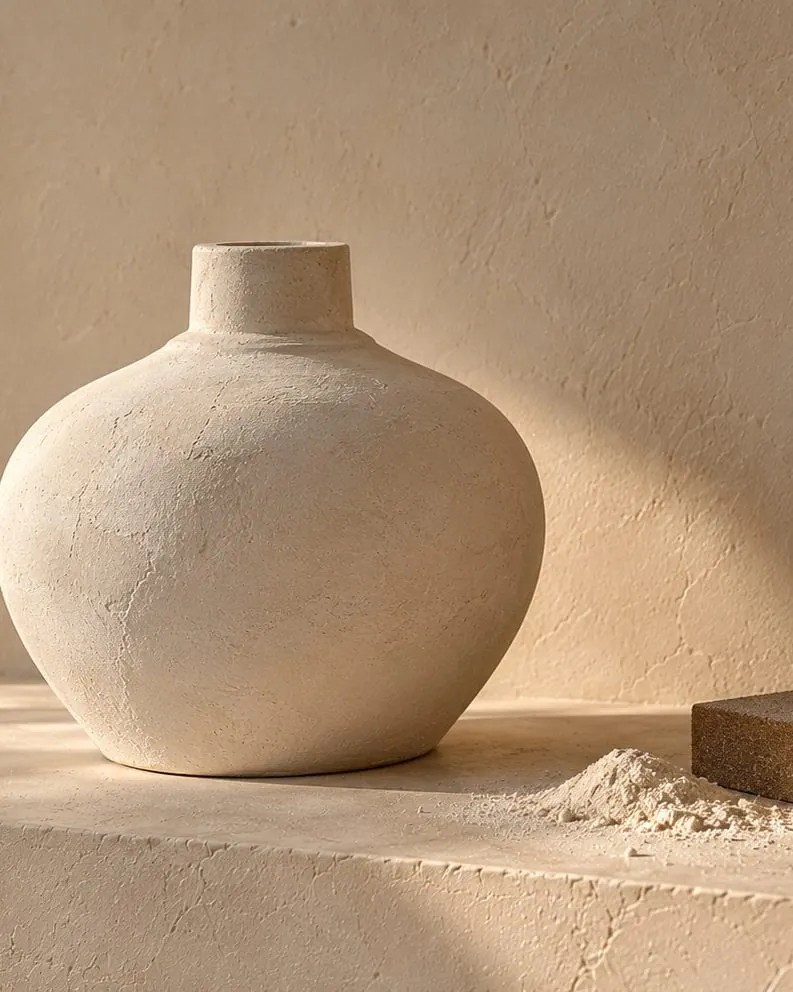
Alvor is cast one at a time. The mould takes two days to dry, the plaster a week to cure before anyone can sand it, and the sanding is a day's work by one person. Then the wiring, then the shade, which is sewn after the base is finished so the linen matches it.
PIECES — 10 · 07
The side door
A few of the people who buy from us are buying for someone else. They have a client in Estoril with a hall that needs one thing on the plinth, and a week to find it. We like these people, and we have decided not to build them a shop.
PIECES — 05 · 10 · 13
Where the Lioz comes from
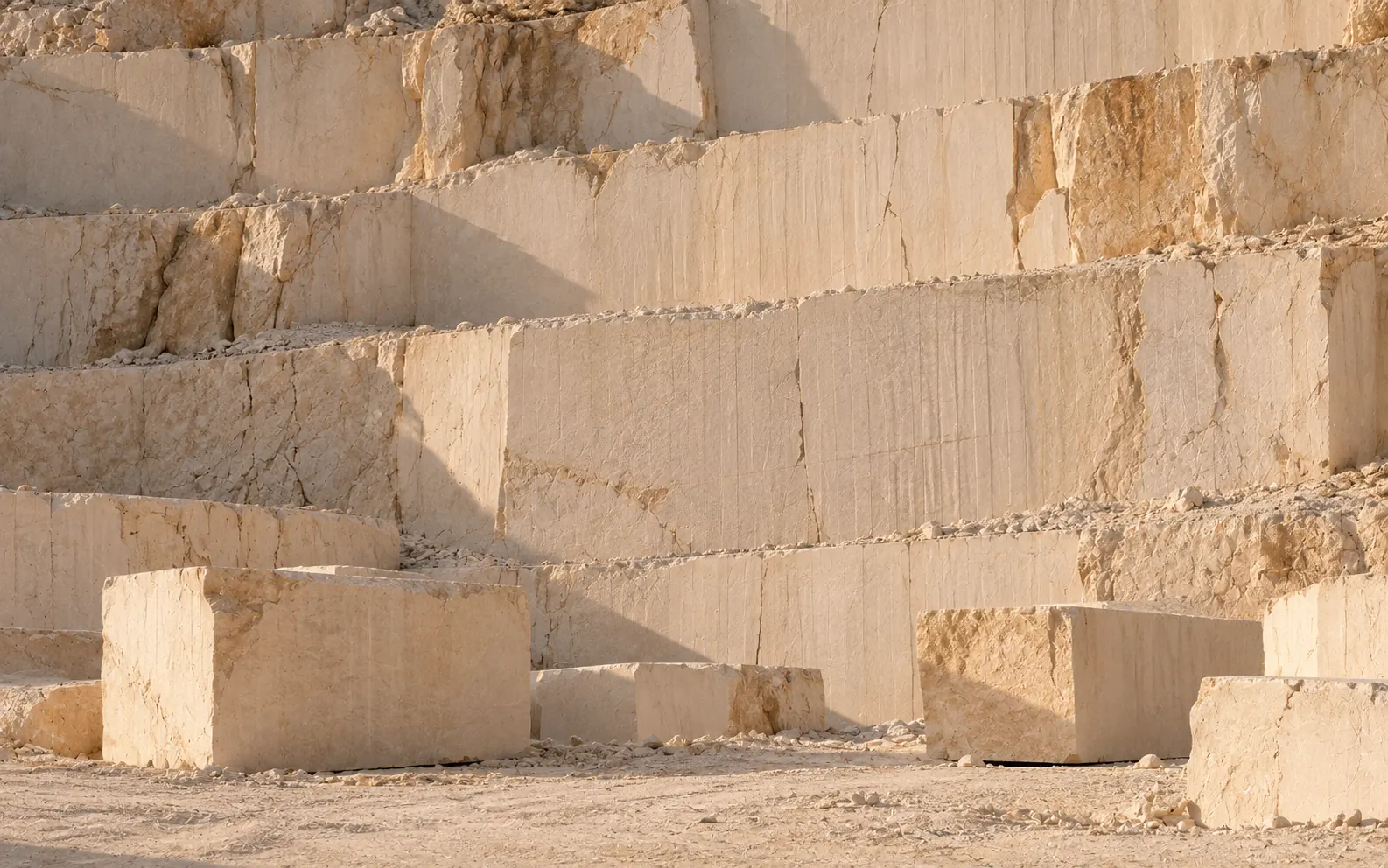
Lioz is the stone Lisbon is made of: the steps up to the Sé, the floors of the Jerónimos, the kerbs you have walked on without looking. It comes out of the ground at Pêro Pinheiro, behind Sintra, in pale blocks that are almost white when wet.
PIECES — 14
Washed until it gives up
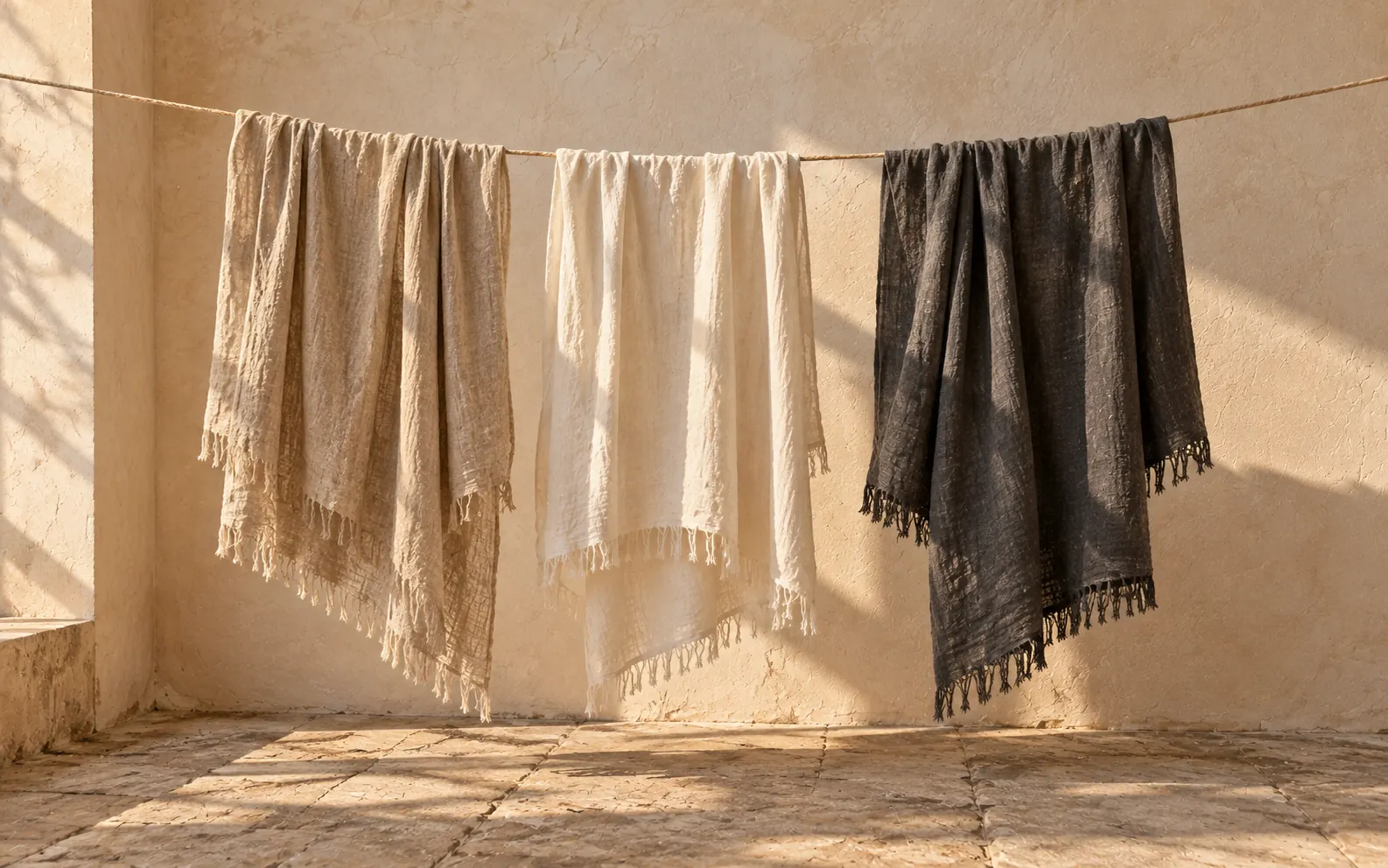
New linen is stiff. It stands up on its own, it rustles, and it feels like a shop. We wash every Marés and every Duna front four times before it leaves, in warm water, and dry it on a line in the courtyard behind the shop.
PIECES — 07 · 08