What the kiln decides
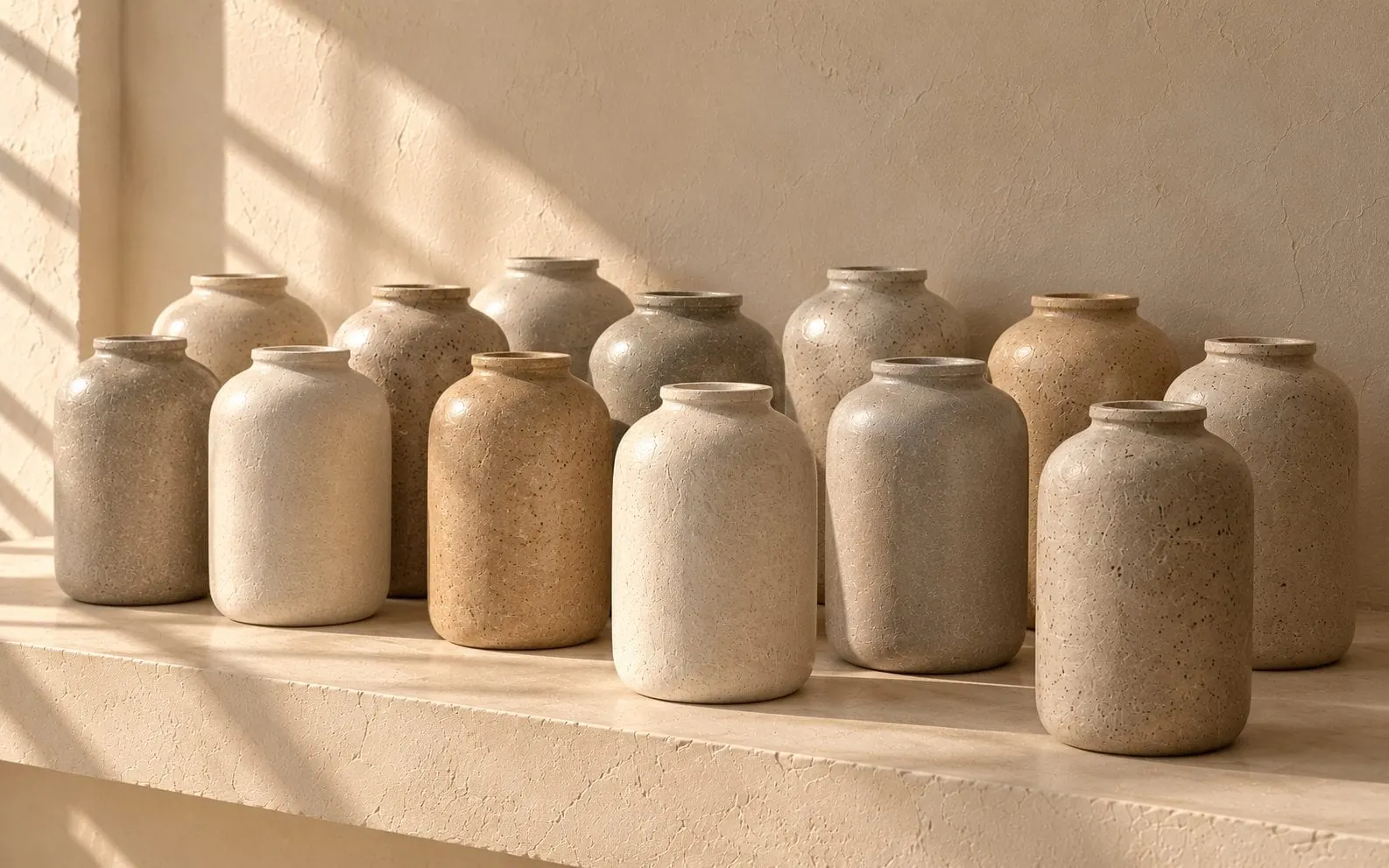
A dozen vessels go into the kiln the same colour. They come out as a family, not as copies. We're asked whether the one in the photograph is the one you'll get, and the honest answer is: nearly.
They're thrown in a workshop in Lisbon, twelve at a time, because twelve is what fits on one shelf of the kiln. The clay is a Portuguese stoneware with a little grog in it, so a tall form holds its shoulder while it dries.
The kiln is gas-fired and old. It doesn't heat evenly, and nobody has tried very hard to make it. The front of the shelf comes out cooler and a shade paler; the back runs warmer.
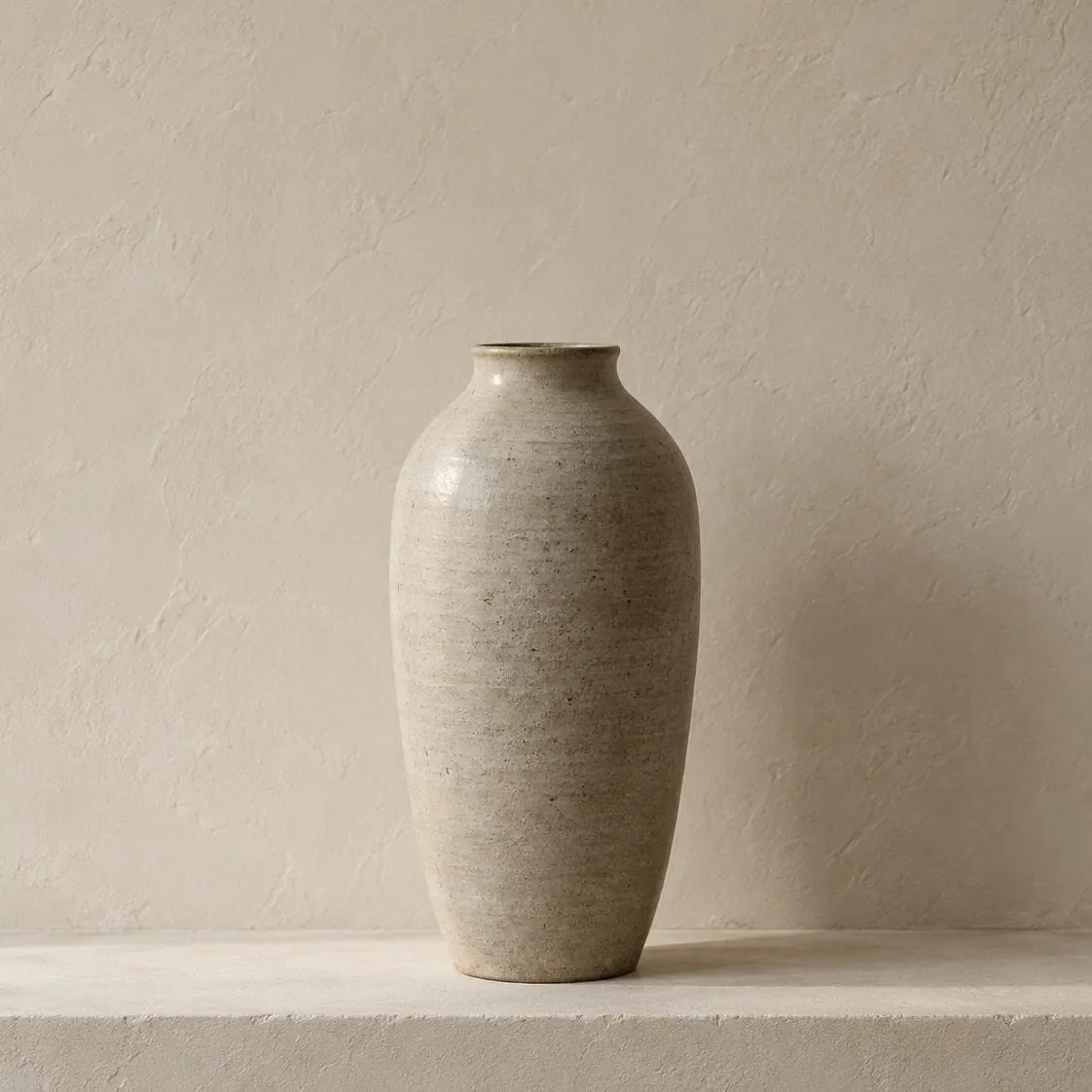
The sand glaze runs a little warmer at the back of the kiln; oyster grey picks up a blush where the flame reaches it. You only see it in low light, at the shoulder, and then you can't stop seeing it.
We used to apologise for this. We'd photograph the most even one and hope. Now we photograph one and tell you yours will be its sibling — the same glaze, the same hand, a slightly different afternoon.
Now we photograph one and tell you yours will be its sibling.
Baía comes out of the same firings. Its charcoal body barely changes from bowl to bowl, so the variation goes somewhere else: the nacre lustre is fired on last, at a lower heat, and some bowls take a warmer pearl than others.
So the honest answer stands: nearly. If nearly isn't good enough, write to us; we'll send three photographs of the ones on the shelf and you pick. Most people who ask choose the one we would have sent.