On the holes in travertine
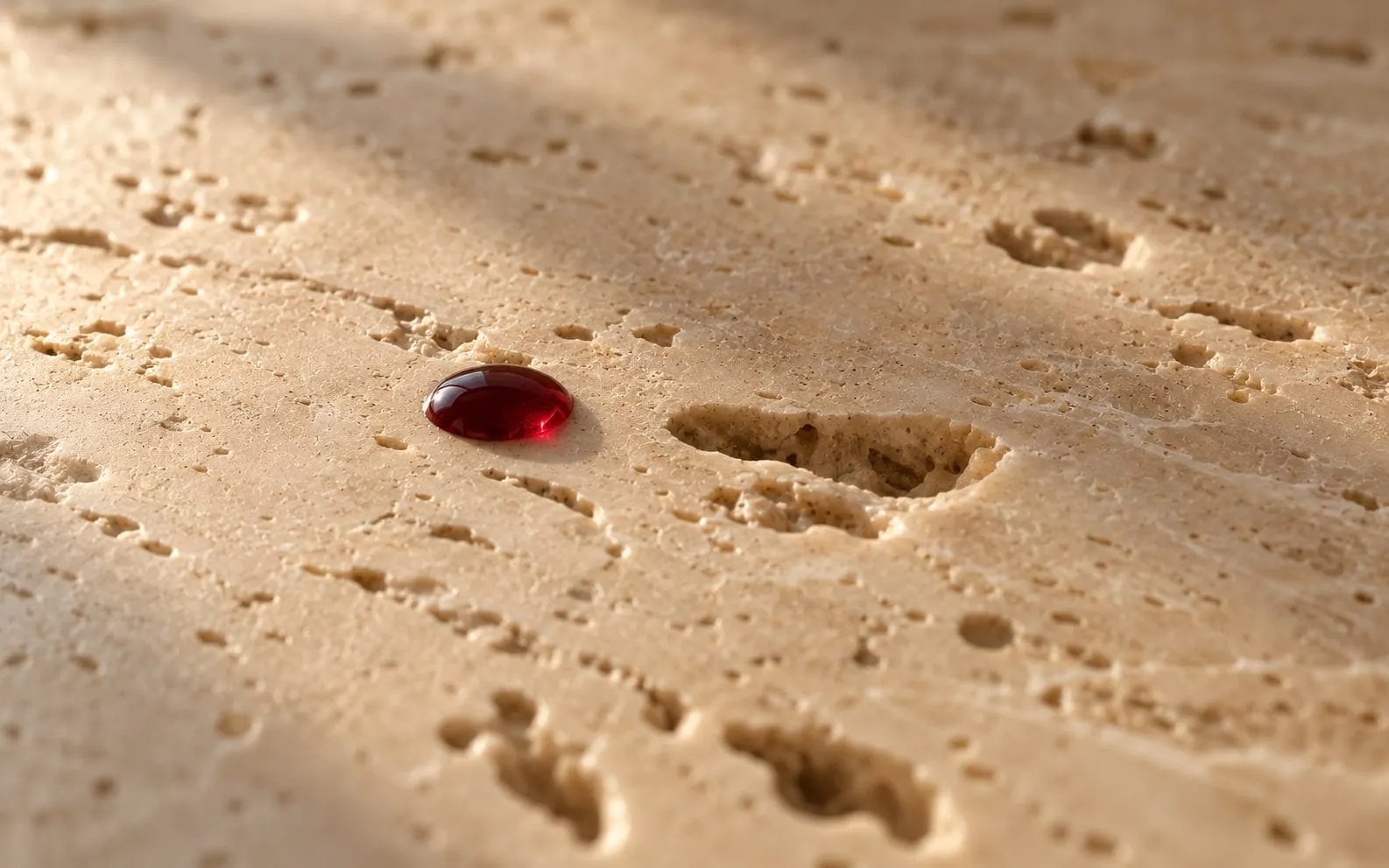
Travertine forms in hot springs; the holes are where the gas was. Fill them and you get a flat, slightly dead stone. Leave them and you get a surface that reads as made by something other than a machine. We leave them, and we seal the stone, so wine and oil wipe off.
Ours comes from the Alentejo, from quarries that have been cut for a very long time. It is honey-coloured, soft enough to saw and hard enough to stand on, and every block carries its own map of holes.
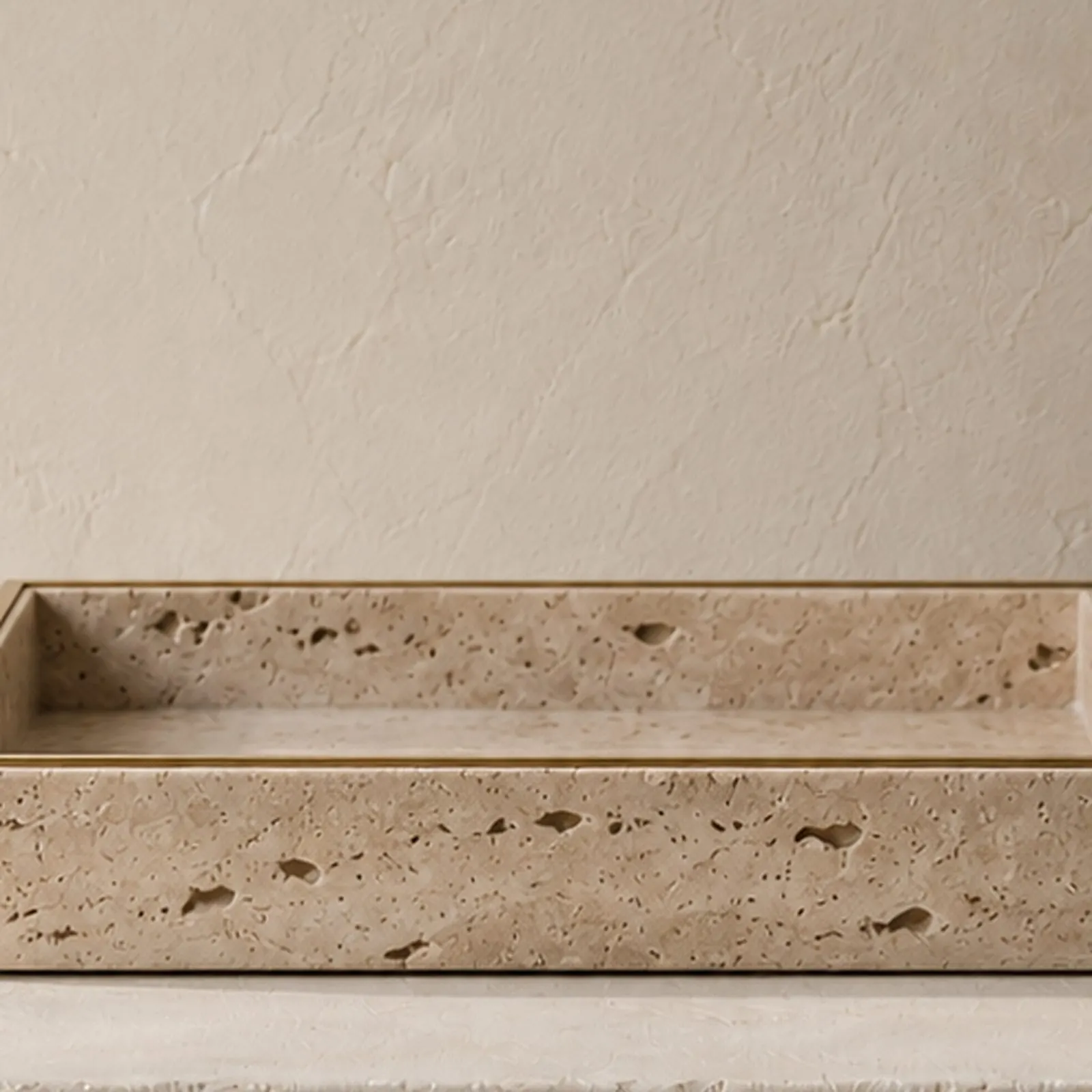
There are two ways to finish it. The usual one is to fill the holes with a resin paste, sand it flat and polish it. It looks clean in a showroom and slightly dead in a house — like a photograph of stone printed on something else.
We hone it instead: rubbed smooth, never shined, holes left open. Then we seal it, inside the holes too, so a spill sits on the surface long enough for you to notice it.
The holes are there. They were there in the quarry. They'll be there in your hall.
The tray is the piece most often returned, and it's always for the same reason: someone has mistaken the holes for chips. So, before you buy: the holes are there. They were there in the quarry. They'll be there in your hall.
It changes a little with use. Where hands go, it warms; the edges of the holes soften. Reseal it once a year with the wax in the box, on a soft cloth, and leave it overnight.
If that's not what you want, the Lioz pieces are smooth. Helena carves Seixo in both stones; the Lioz is denser and cooler and has no holes at all.