Six weeks for a lamp
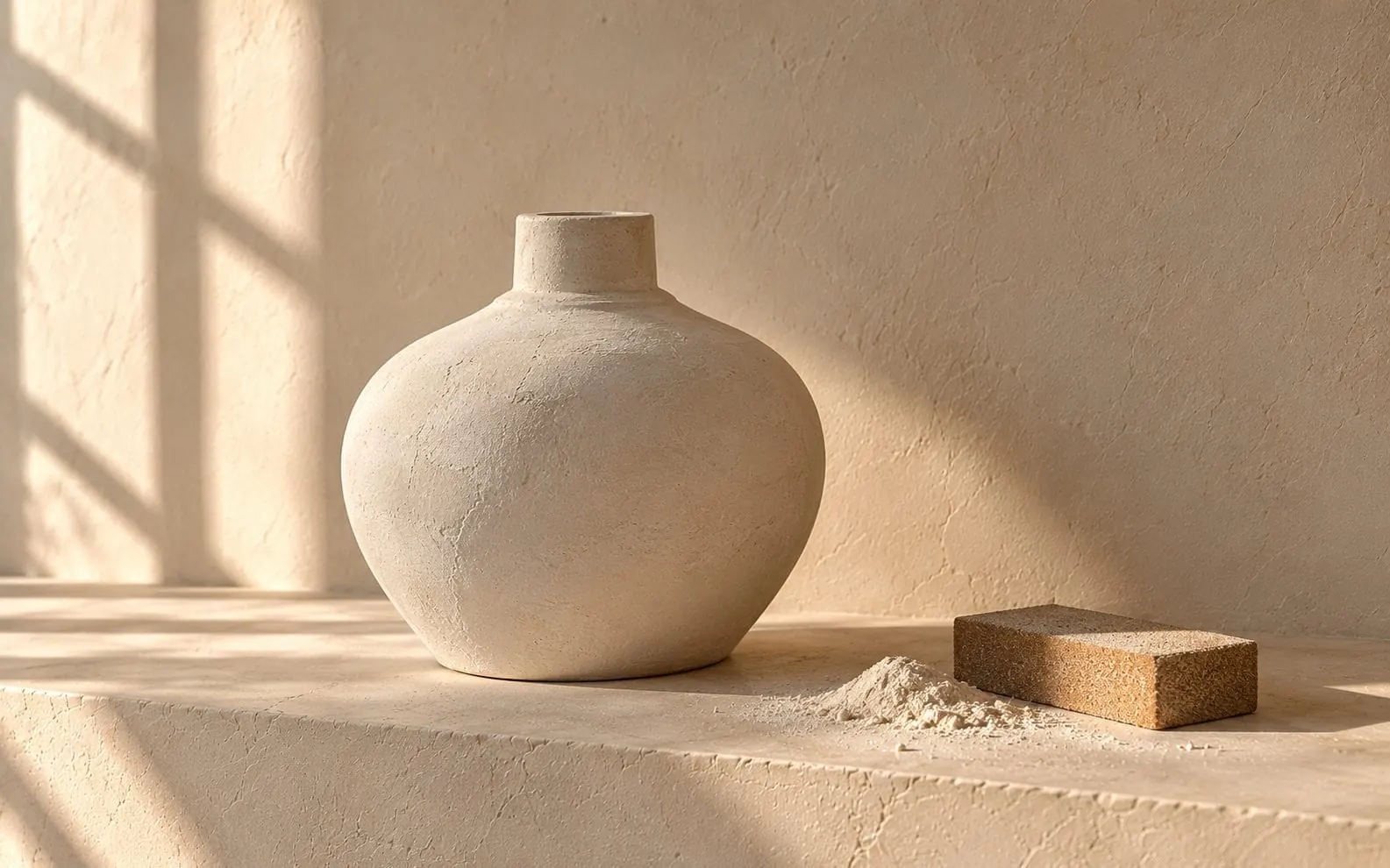
Alvor is cast one at a time. The mould takes two days to dry, the plaster a week to cure before anyone can sand it, and the sanding is a day's work by one person. Then the wiring, then the shade, which is sewn after the base is finished so the linen matches it.
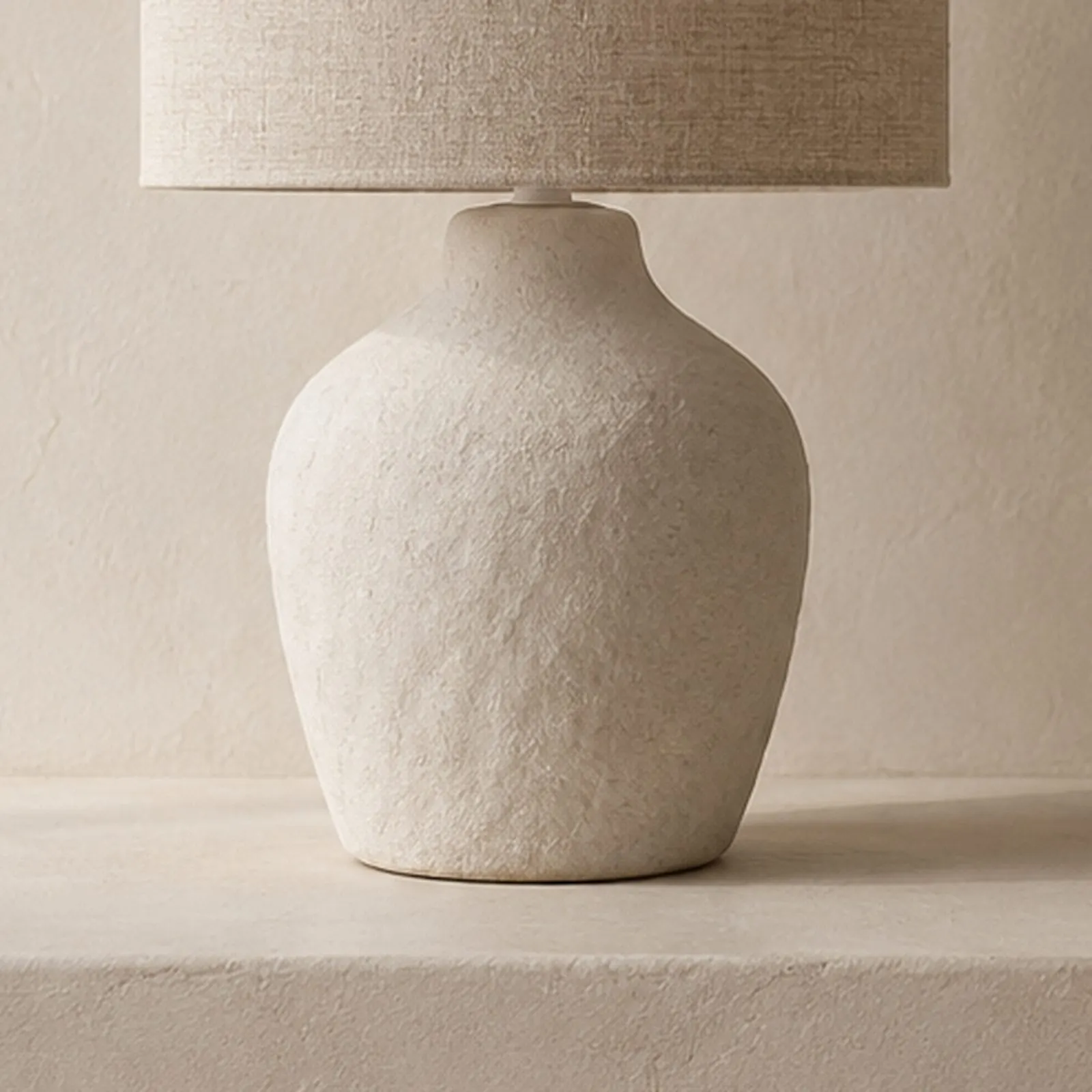
The base is poured in a two-part mould made from the first lamp, the one we kept. Every pour takes the shape exactly and the surface not at all, so each base comes out looking like the same lamp drawn by a different hand.
Then it waits. Plaster cures from the outside in, and a base sanded too early chalks and crumbles at the shoulder. A week on a shelf in a dry room is what it needs; we tried five days once and regretted it.
The sanding is done by hand, with a cork block and three grades of paper. It's the part that makes it Alvor: the marks follow the curve of the base, and you can see where the hand went round.
The six weeks aren't a queue; they're the lamp.
The shade comes last, so it can be matched to the finished base — natural linen against raw plaster, bone linen against limewash. The cord is wrapped in the same linen and leaves the base at the back.
The six weeks aren't a queue; they're the lamp. We'll write to you twice while it's being made: once when it goes into the mould, once when it comes out.
People who know this don't mind. People who weren't told leave, and we don't blame them.